
Chapter 7: Architecture and Porftolio Management
This chapter demonstrates how to operationalize architecture by connecting it to investment decisions, governance, and portfolio management. It explains how mechanisms like review boards and roadmaps ensure architecture guides projects and delivers tangible business value.
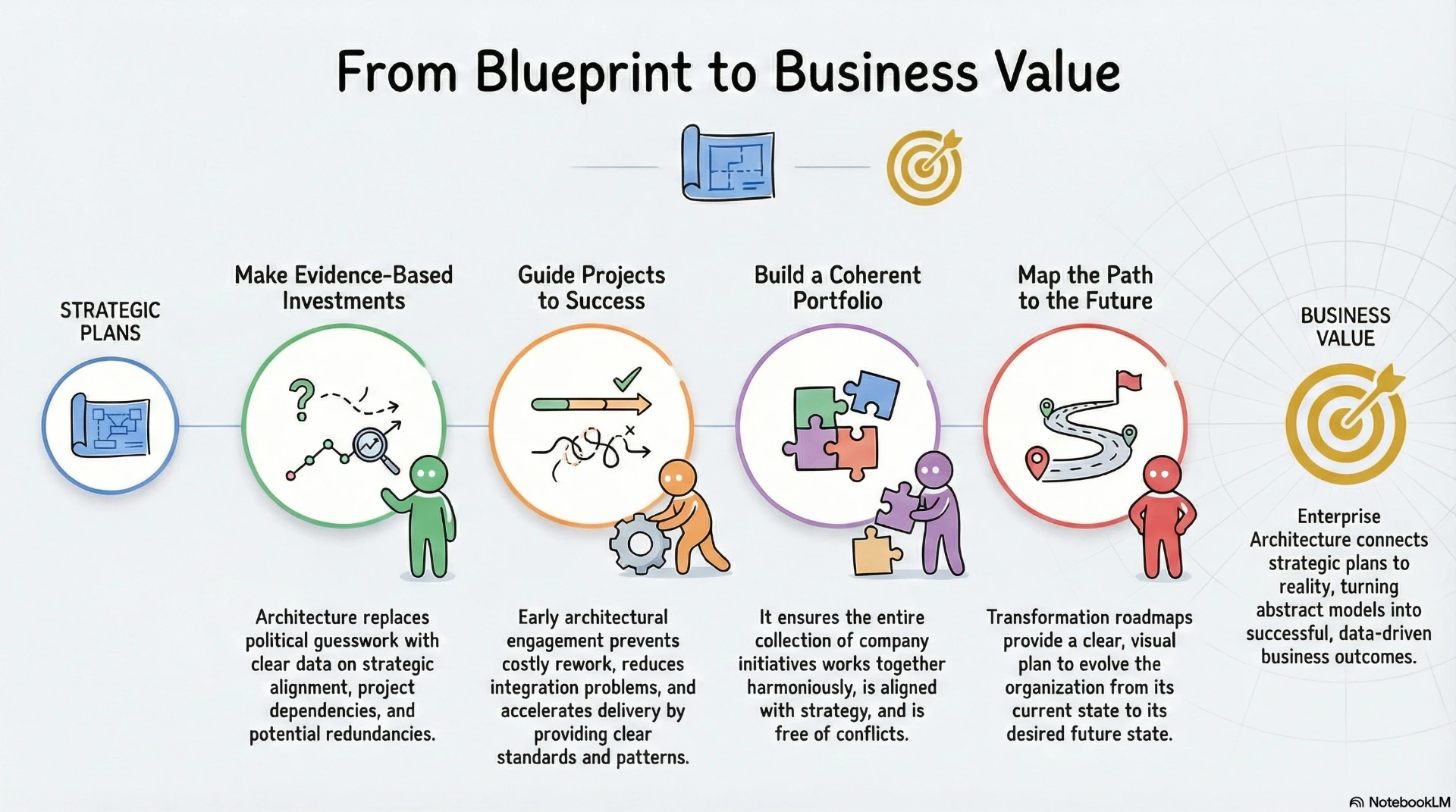
Learning Objectives
By the end of this chapter, you'll be able to:
- Explain how architecture informs investment and prioritization decisions
- Describe the key elements of architecture governance
- Identify how enterprise architecture integrates with portfolio management
- Recognize how architecture supports project delivery throughout the lifecycle
Key Concepts
Gap analysisExplainDescribeIdentifyInitiative identificationRecognizeResources are limitedInformation is incompleteImpacts are uncertainStakeholders competeDependencies are hiddenStrategic alignment visibility
Self-Assessment
Before moving to the next chapter, ensure you can: