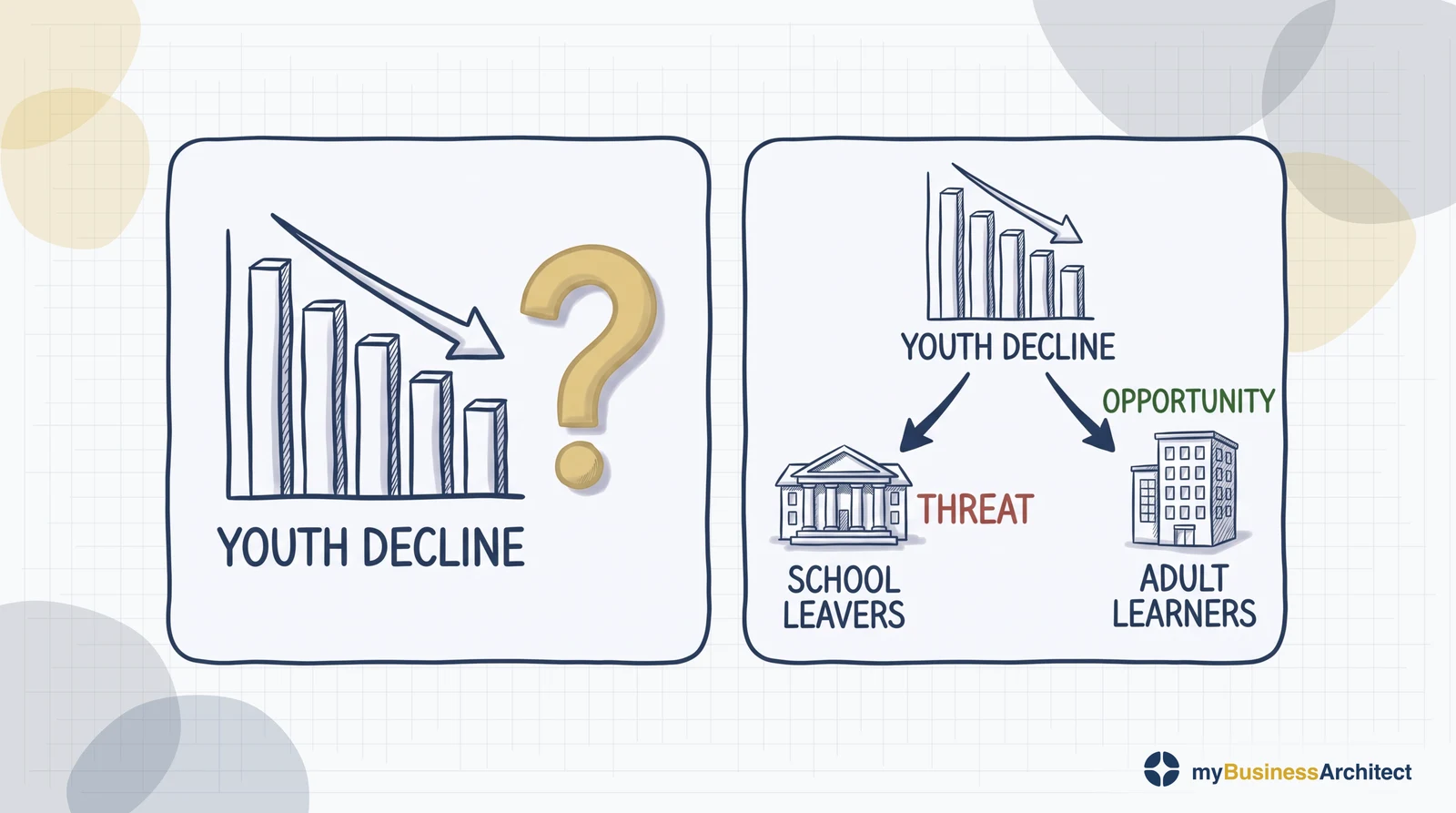
Purpose
The Same Force Is a Threat and an Opportunity
Two institutions read the same demographic data and reached opposite conclusions. Both were right. A force has no valence until you say what you exist to do.
mybusinessarchitect
mybusinessarchitect
Practical guidance on business architecture, from frameworks and strategy to real-world application.
Two institutions read the same demographic data and reached opposite conclusions. Both were right. A force has no valence until you say what you exist to do.
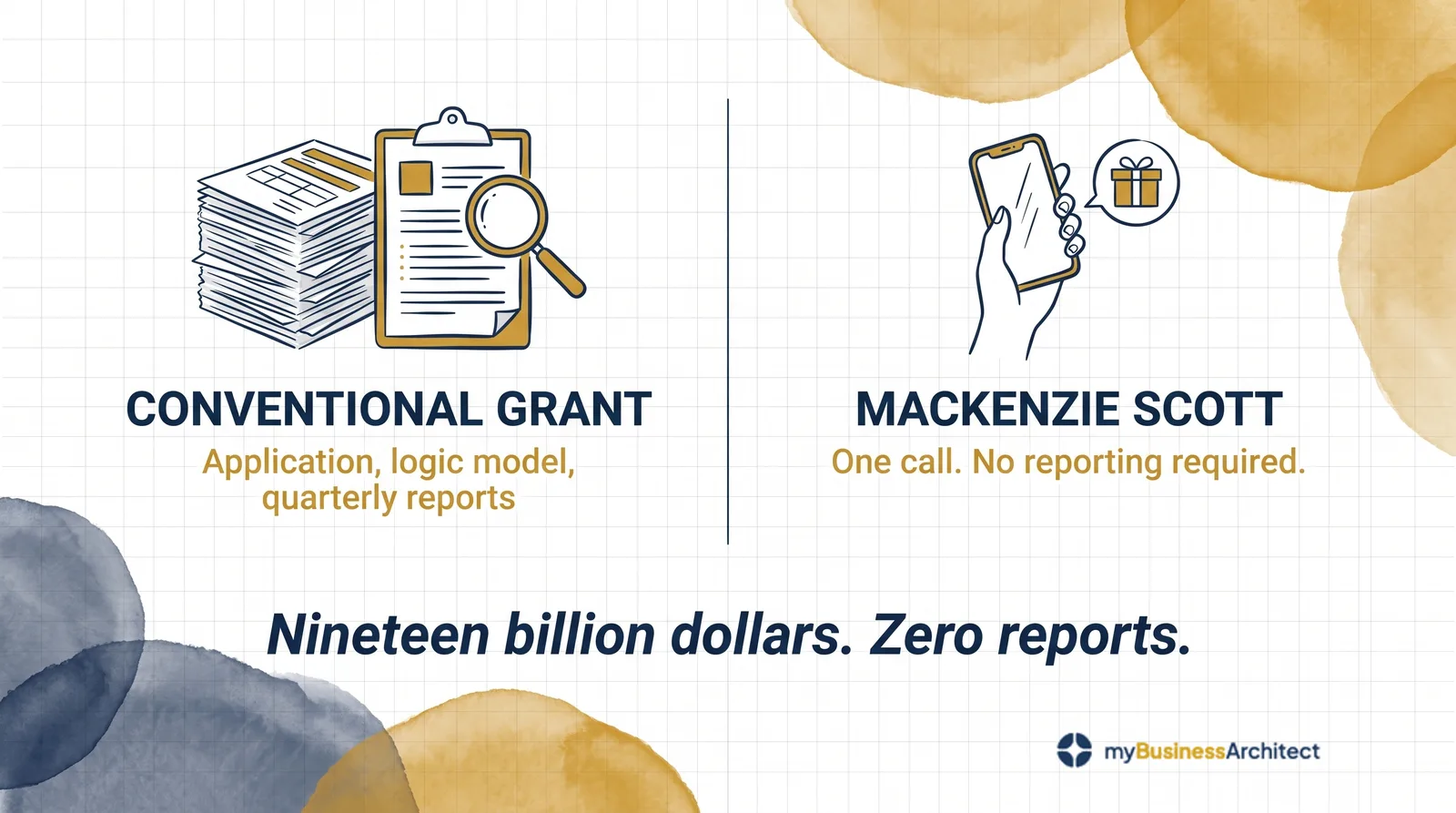
Nineteen billion dollars given away with almost no reporting attached, and the recipients did at least as well. The burden of proof on reporting has moved.
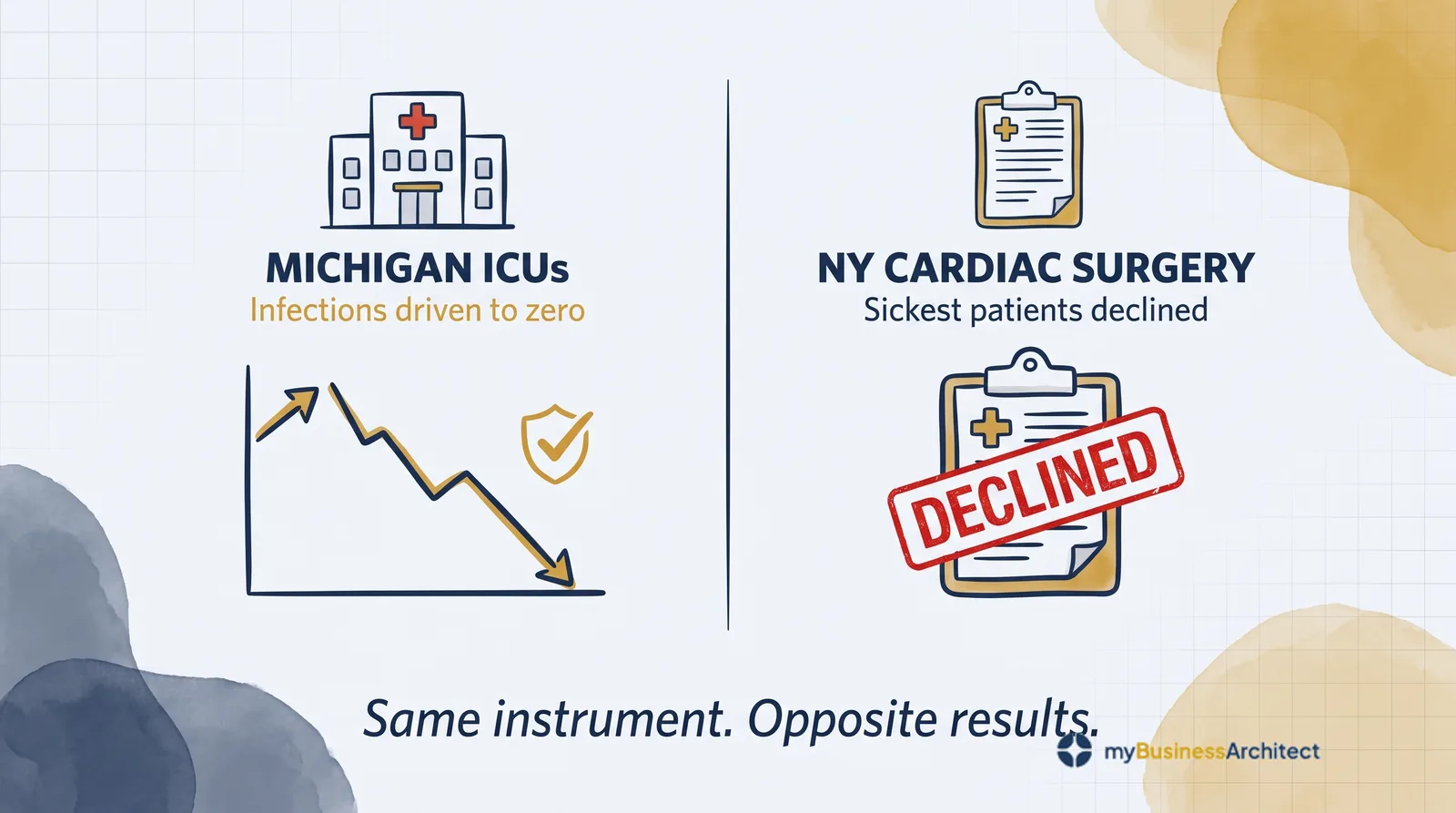
The same instrument drove infections to zero in one hospital and pushed surgeons to refuse the sickest patients in another. Five conditions explain why.

A capability can hit its target every year and still be aimed at the wrong number. The strategy moved. Nobody re-asked whether the target still did.
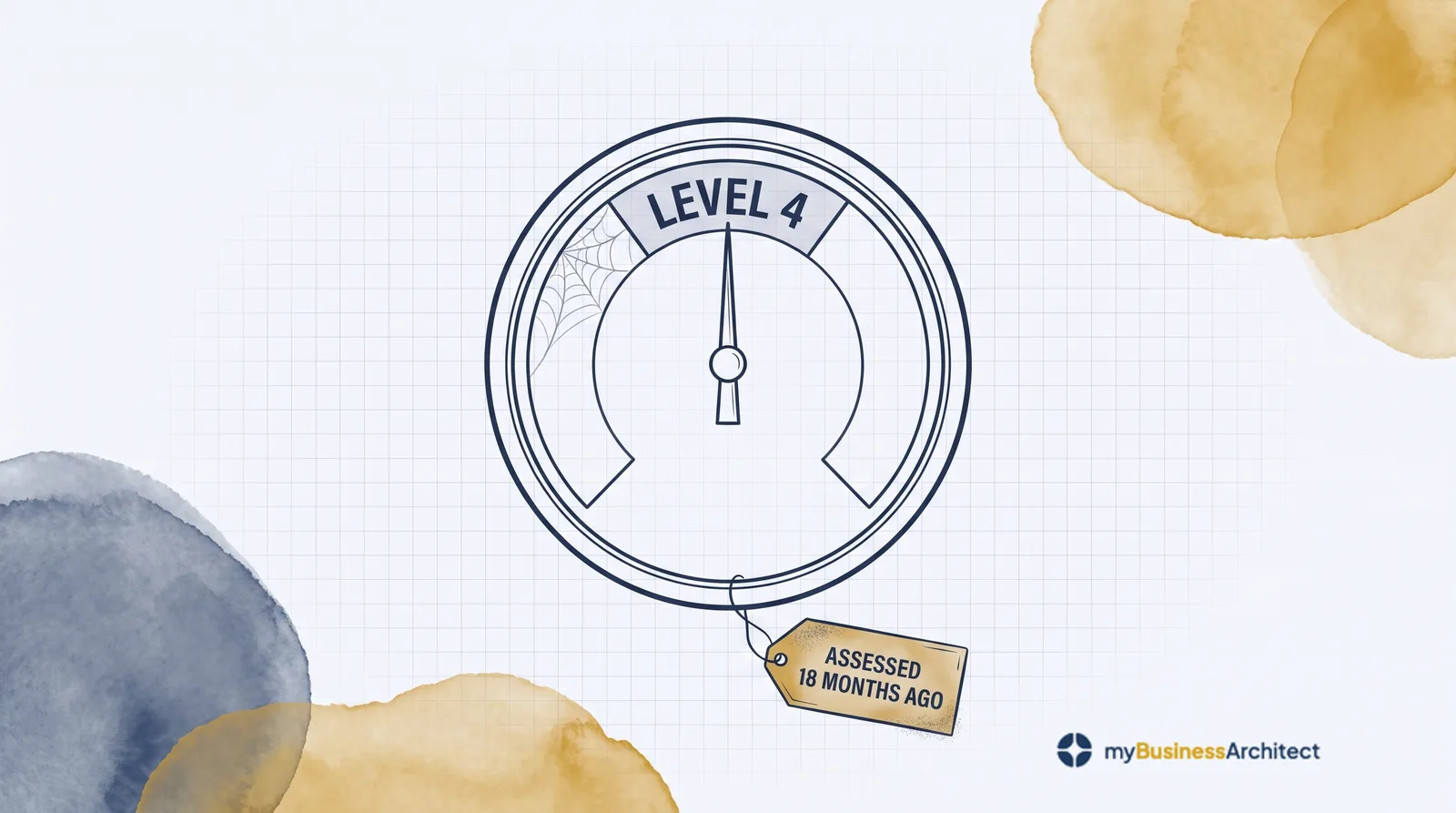
A capability can be uplifted, assessed, and correctly scored, and still be quietly coasting on that score two years later. Nobody built a reason to look again.

A certification proves you know business architecture vocabulary. It doesn't prove you can make anyone change what they were about to do.
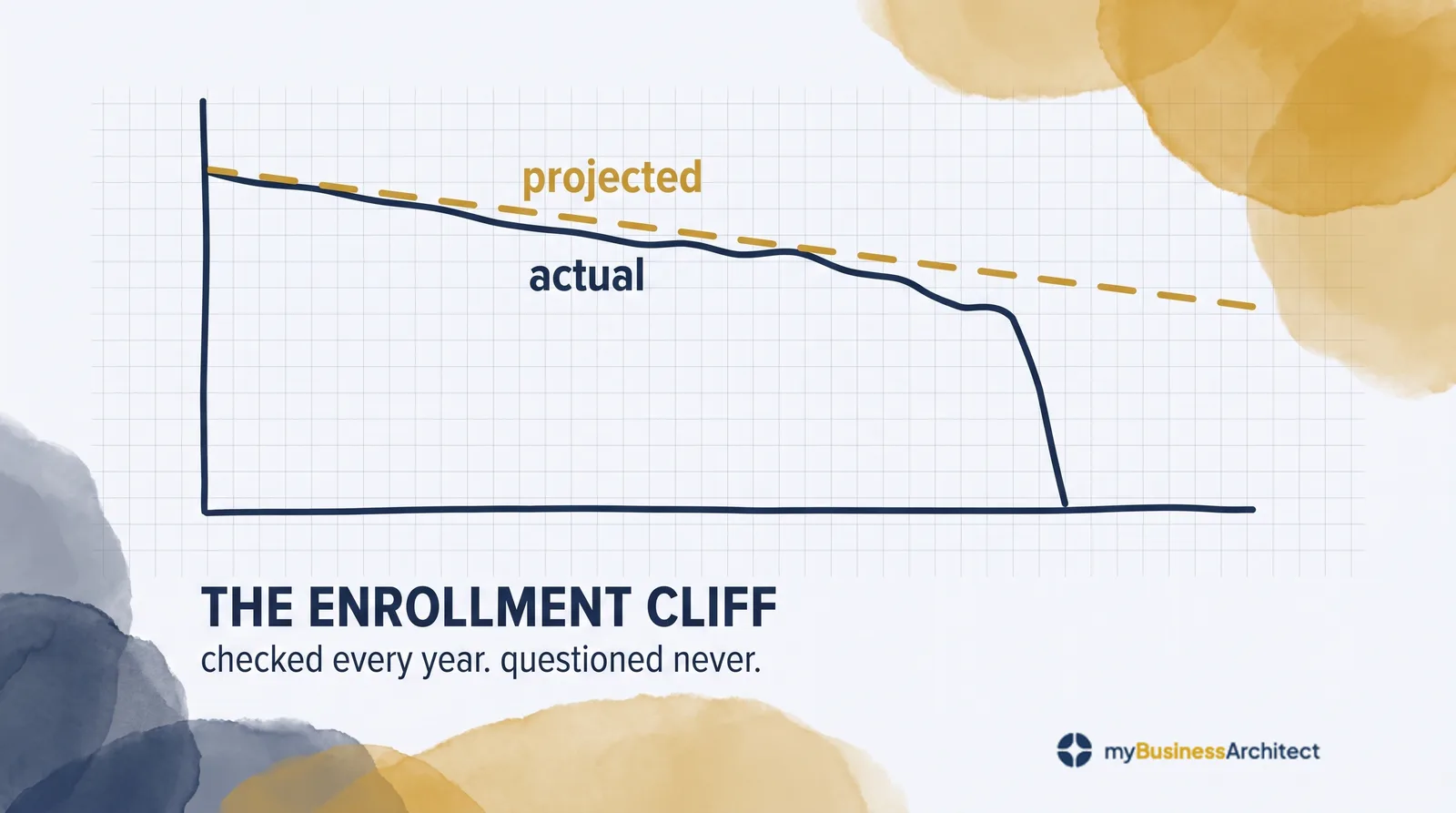
The enrollment cliff was visible for years. The failure wasn't missing the data. It was a target nobody was ever asked to recalibrate.
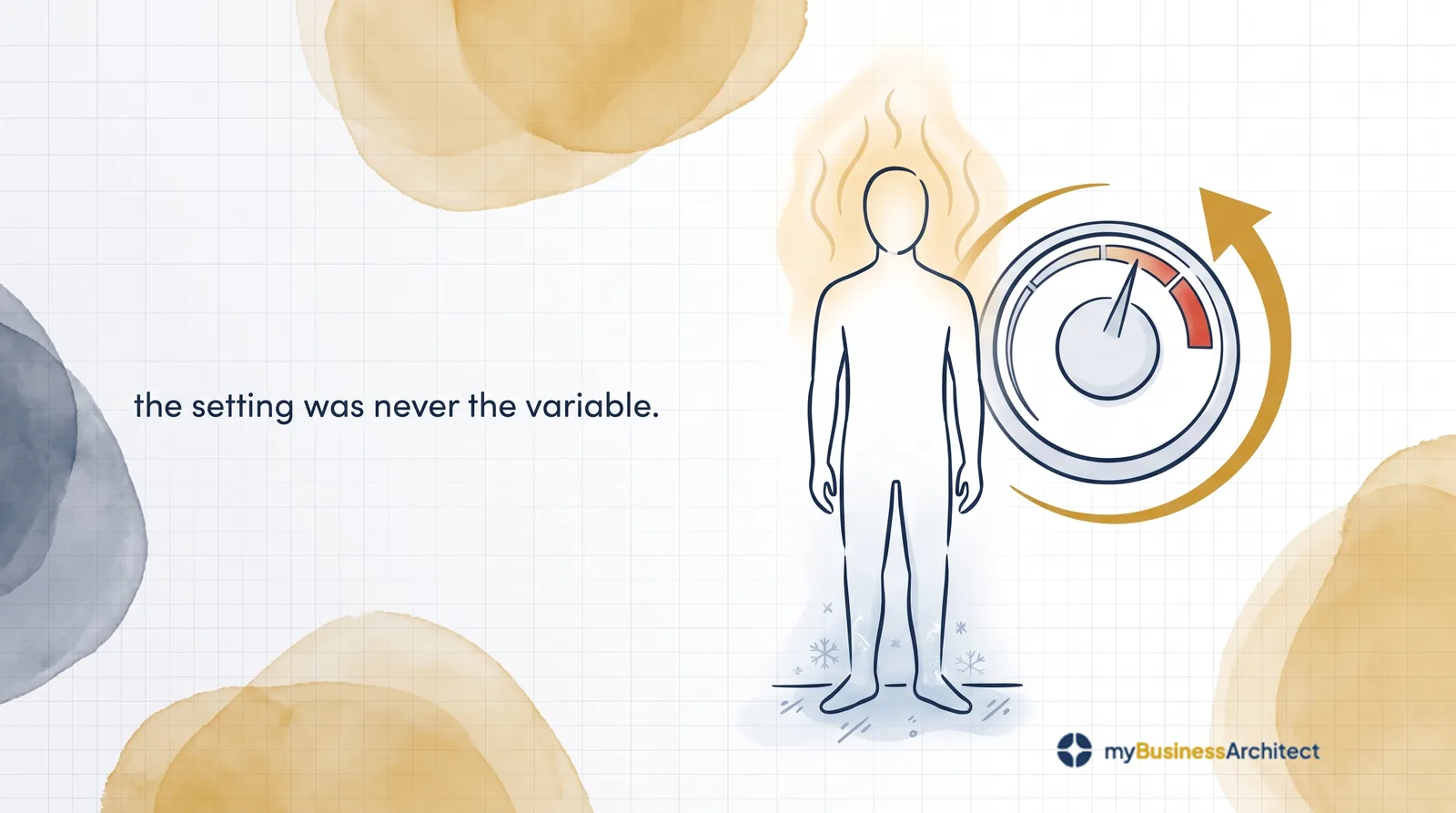
Double loop learning asks whether the governing assumption is right. The harder question is why organisations rarely run it, and the answer isn't ignorance.
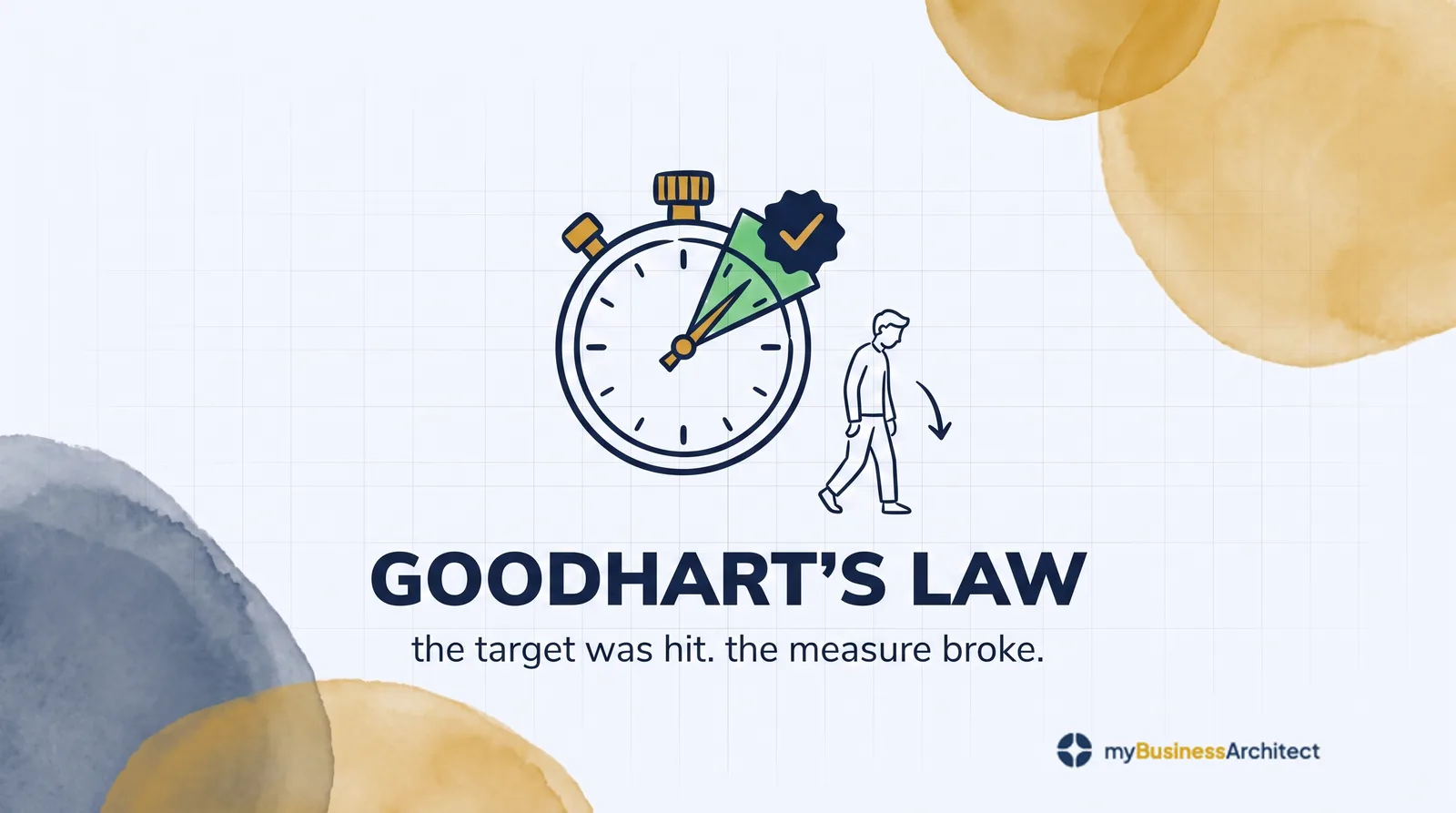
When a metric becomes a target, it stops measuring what it used to. Five real examples of Goodhart's Law, and how to catch it before the dashboard does.
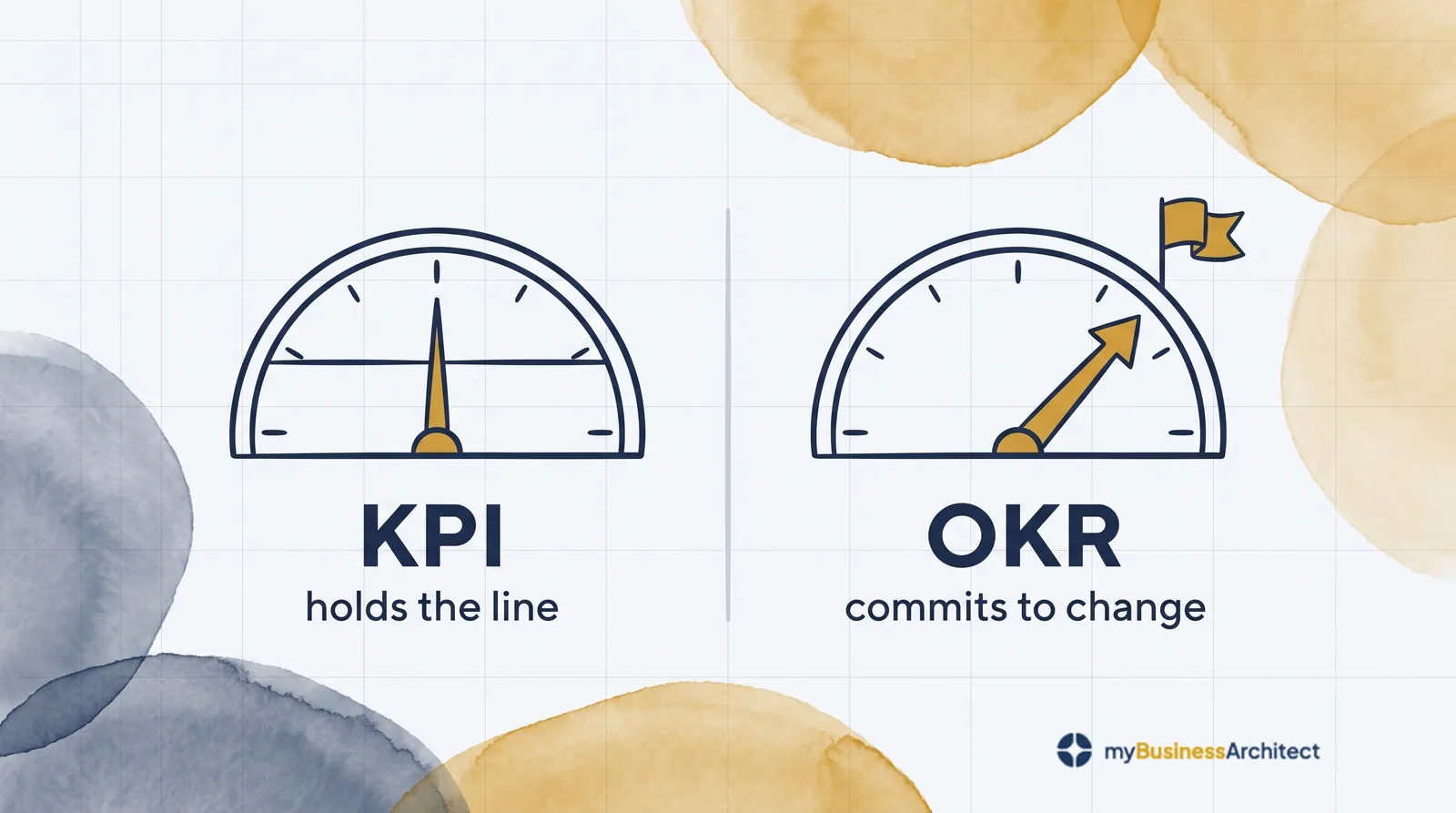
OKRs commit to changing something not true yet; KPIs hold a line you already hold. Not a format difference, a layer difference, and mixing them up is expensive.
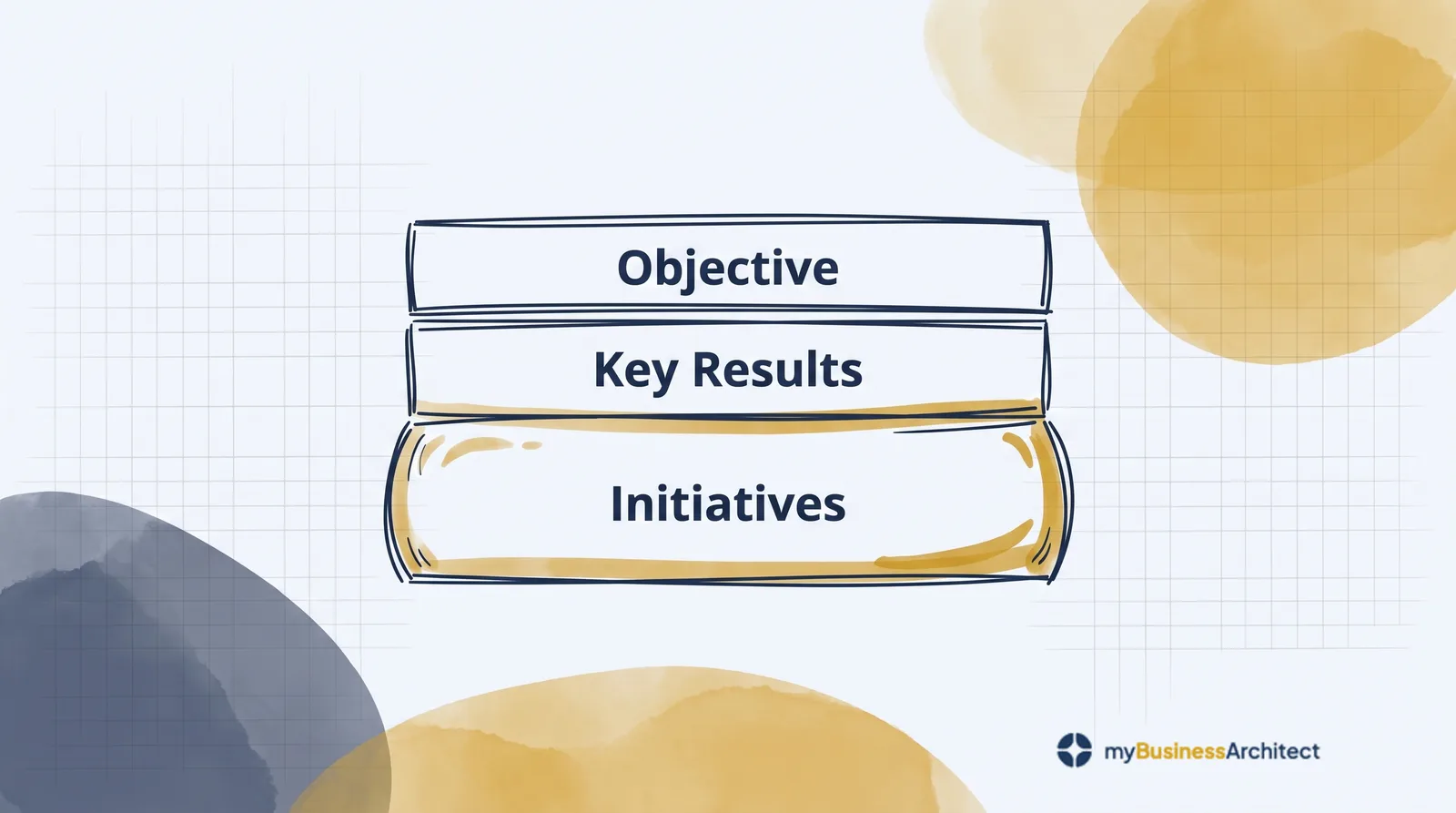
An OKR pairs an Objective with Key Results proving it happened, not busywork that feels like progress. Three examples show how to spot a task list in disguise.
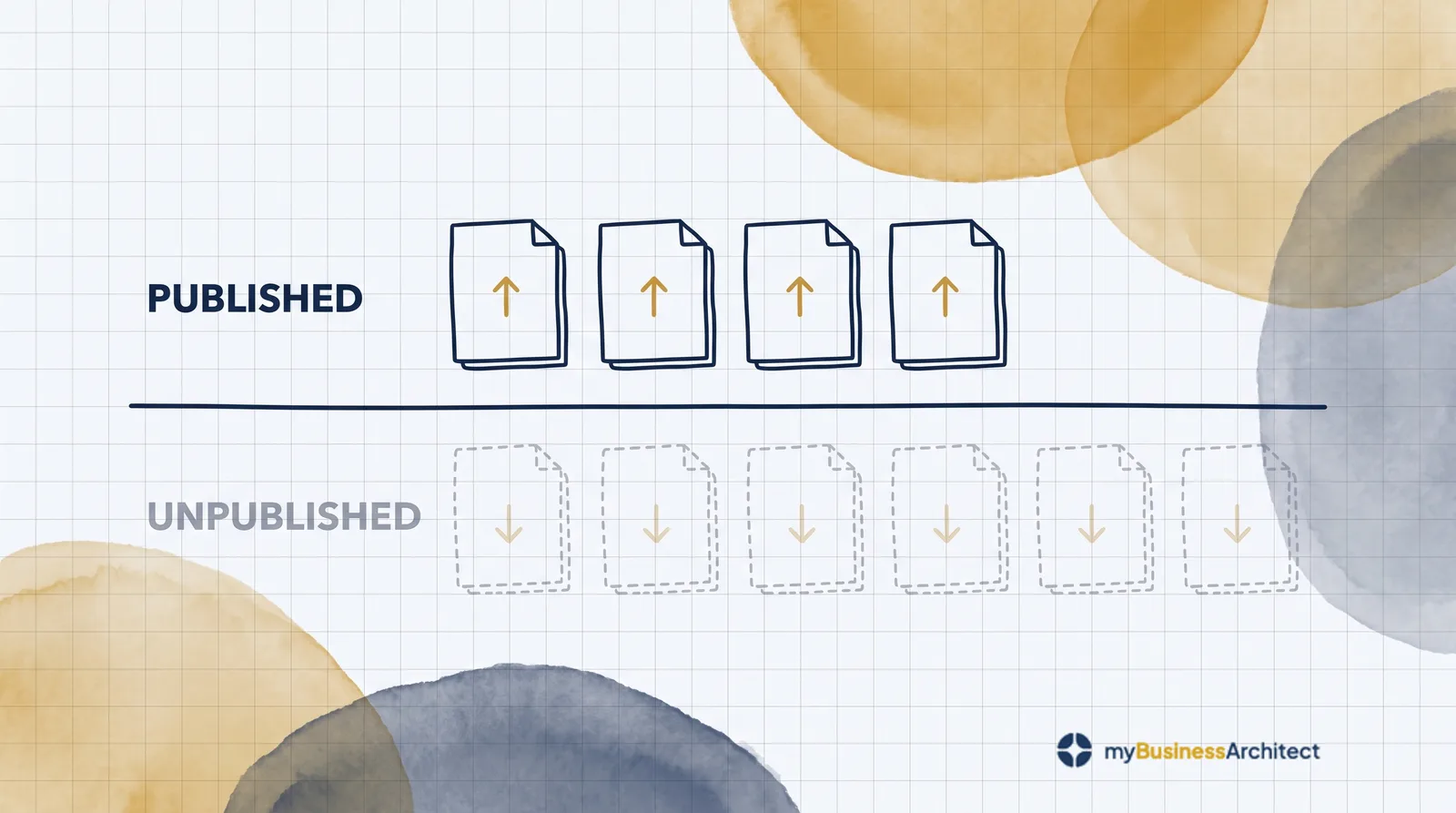
Three decades of published maturity ROI research contain no failures. That's not because failures don't happen. Here's how to write a business case anyway.
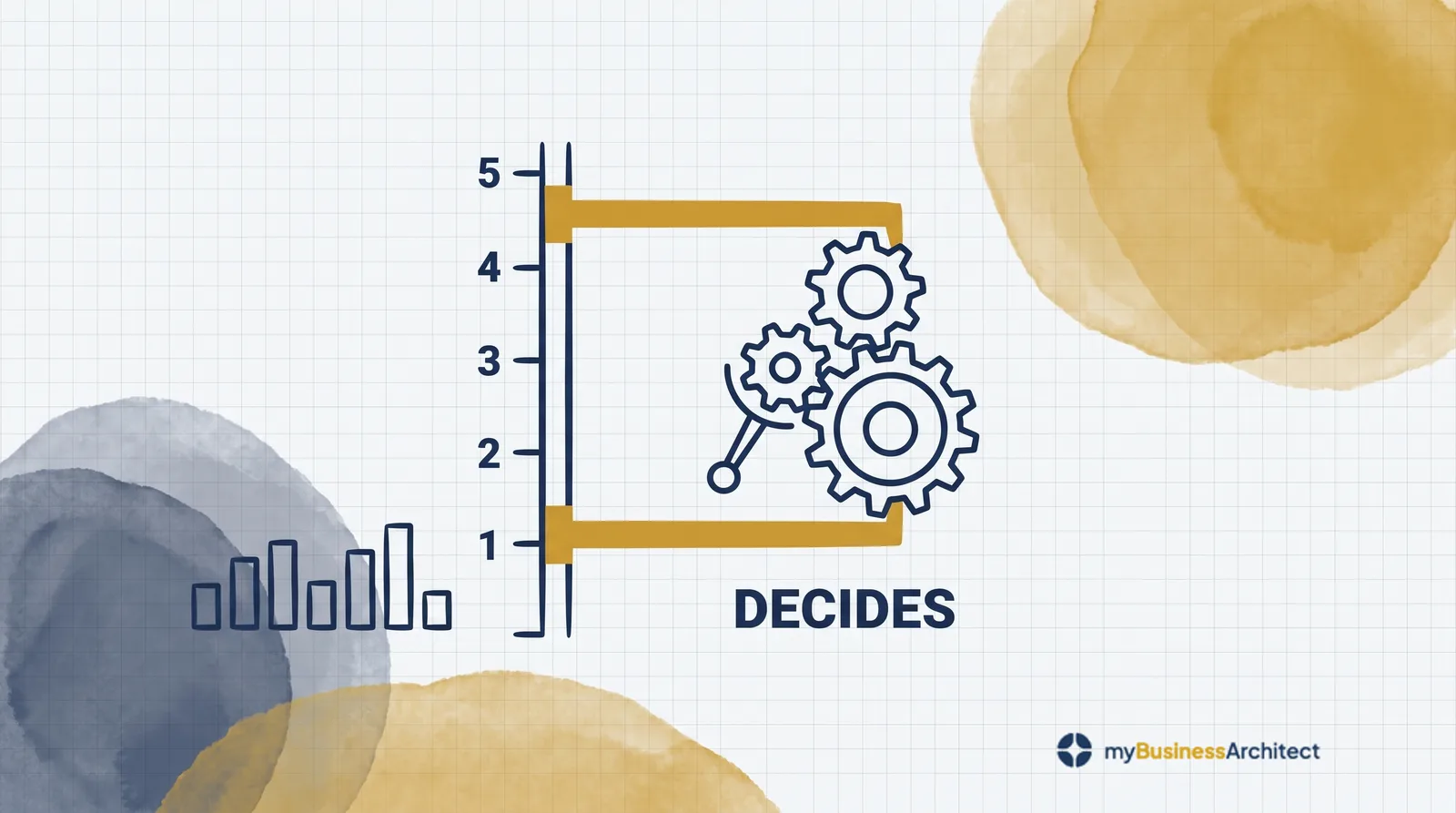
Every maturity model asks how mature your capabilities are. The question that separates organisations that compound from ones that reset sits one level up.
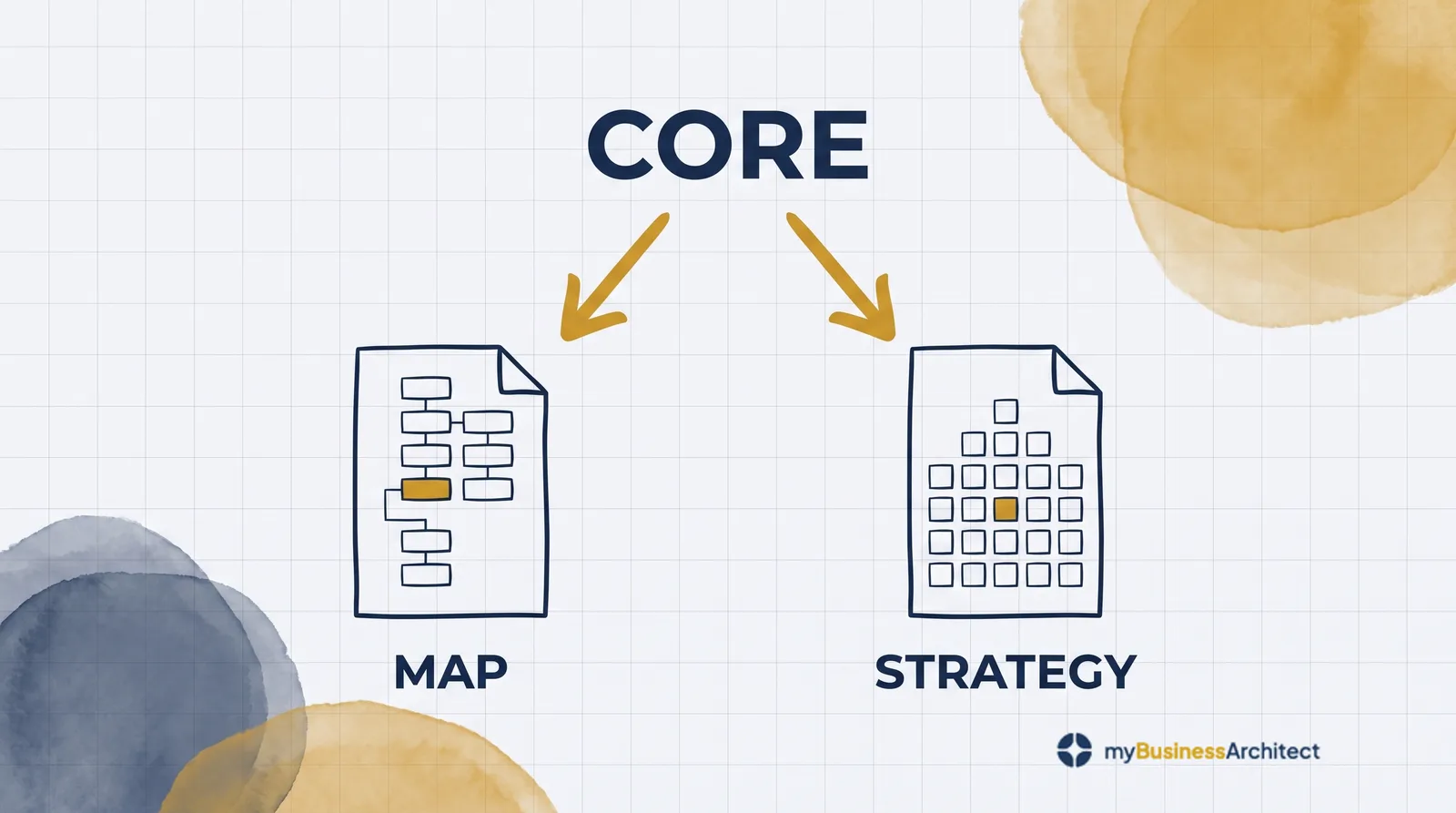
A reference model's 'core' and a strategy's 'core' answer different questions. Confuse them and capability conversations stall.
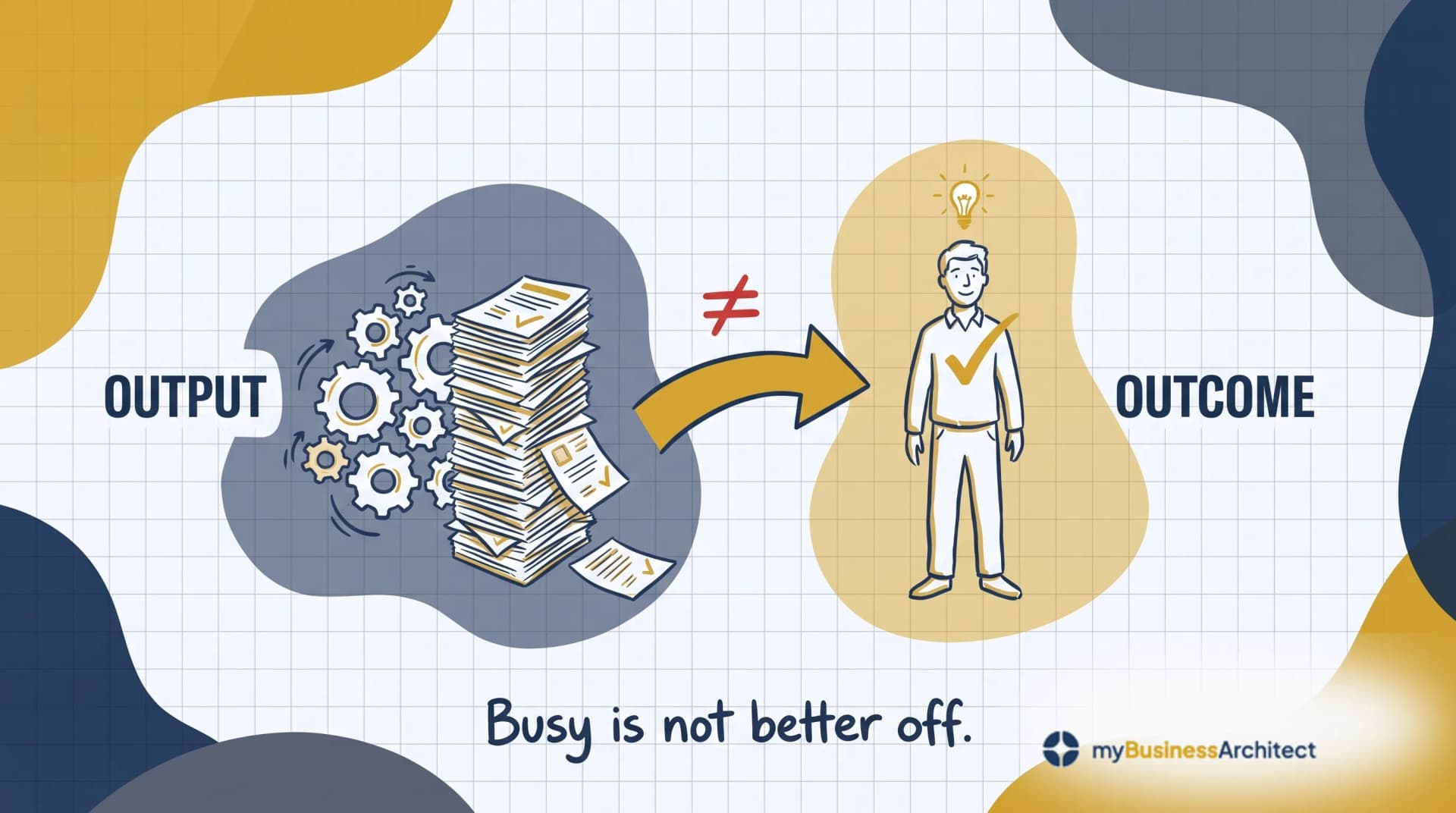
An output is what a service produces; an outcome is the change it makes for the stakeholder. Confusing them lets a program report success while nothing moves.
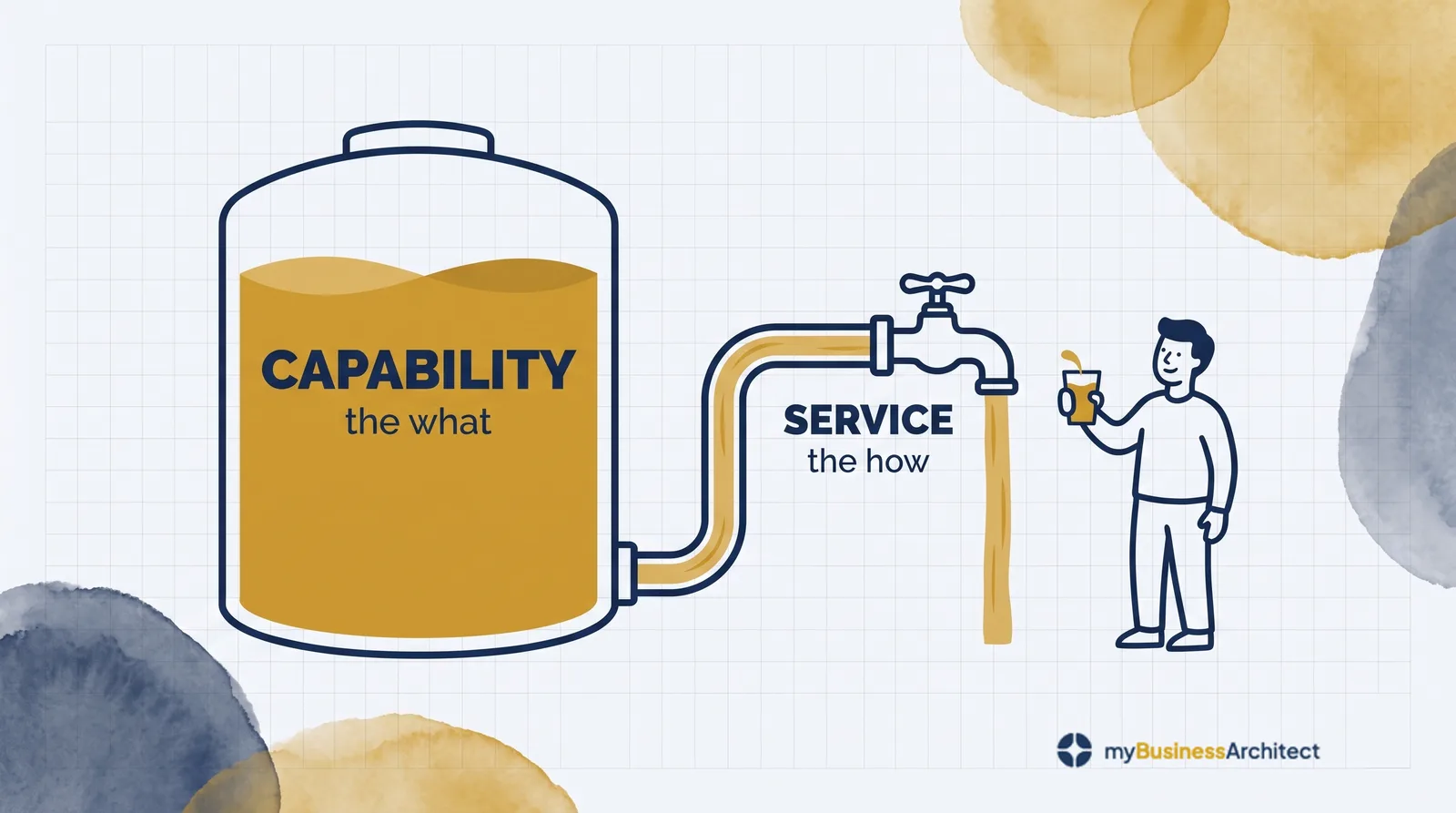
A capability is what you can do; a service is how you operationalise it to reach a customer. It's why you 'have the capability' and nothing reaches anyone.

A delivery-mandate OKR passes every check and changes nothing. How to spot an OKR that's really a task list, and how to put the strategy back.
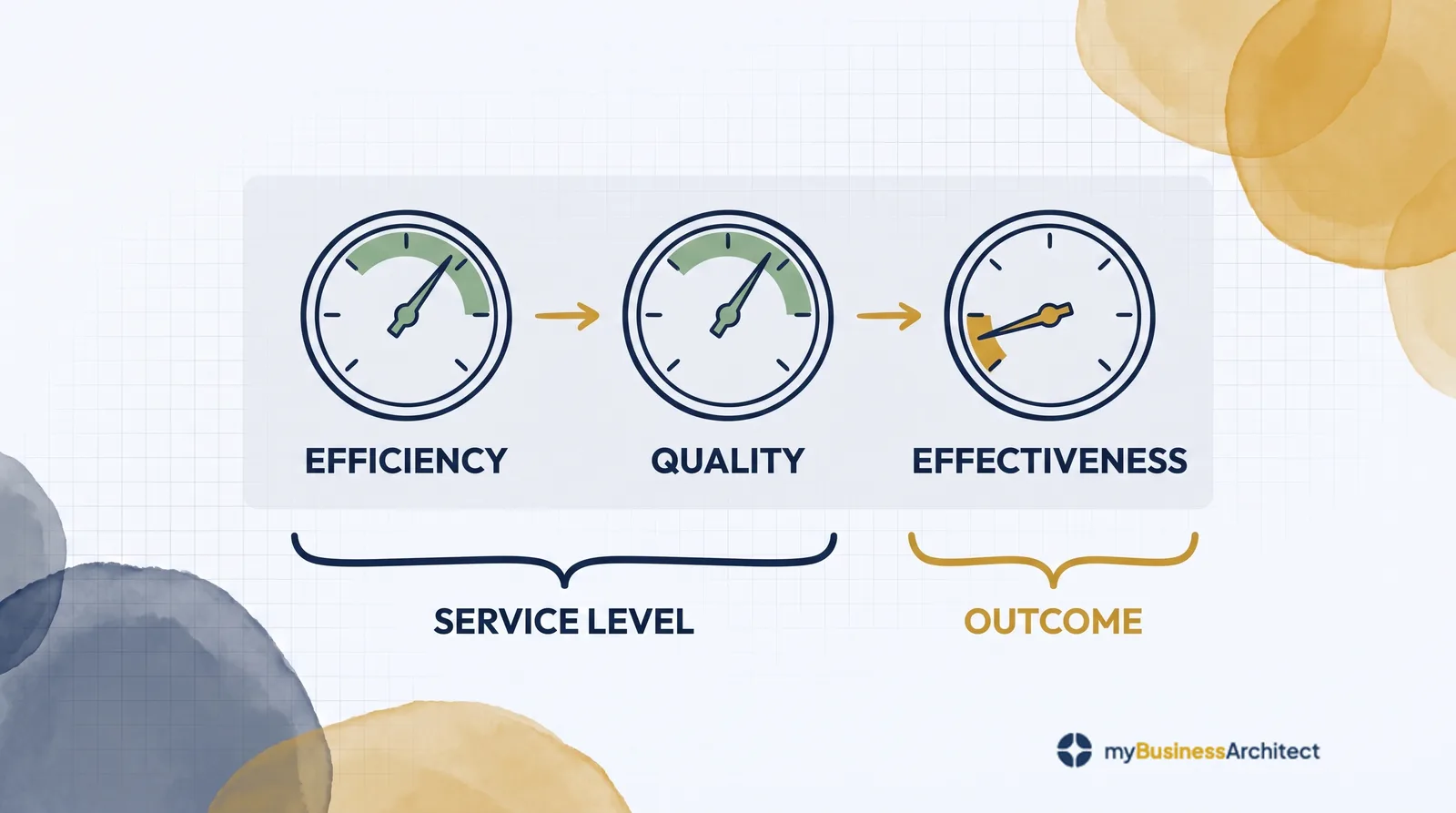
A service is measured on efficiency, quality, and effectiveness. Two are the service level; one is the outcome. Confuse them and the dashboard lies.
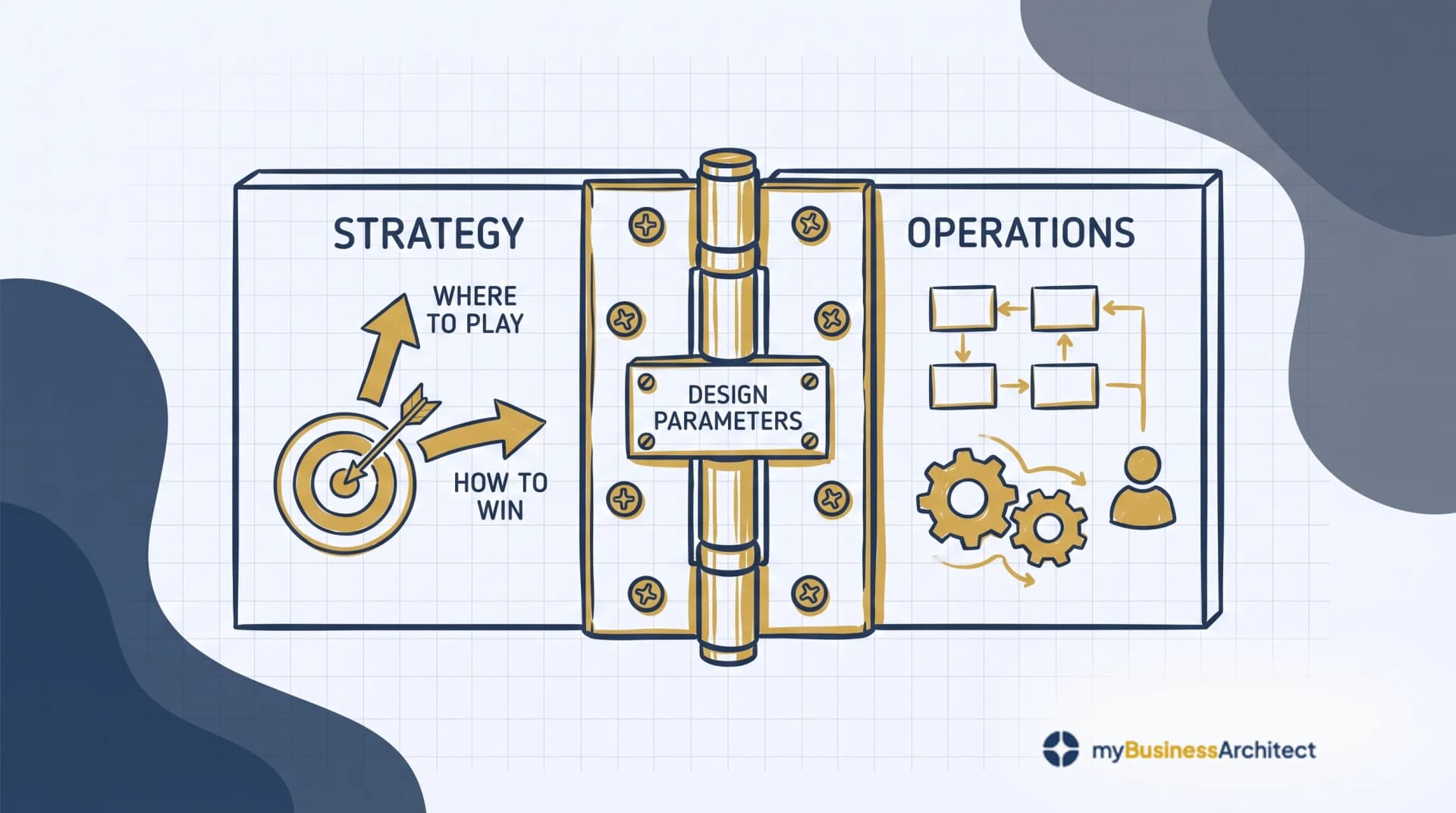
A design parameter states what an operating model must enable, drawn from the strategy. Without them, every choice is an opinion. Here's how to write them.
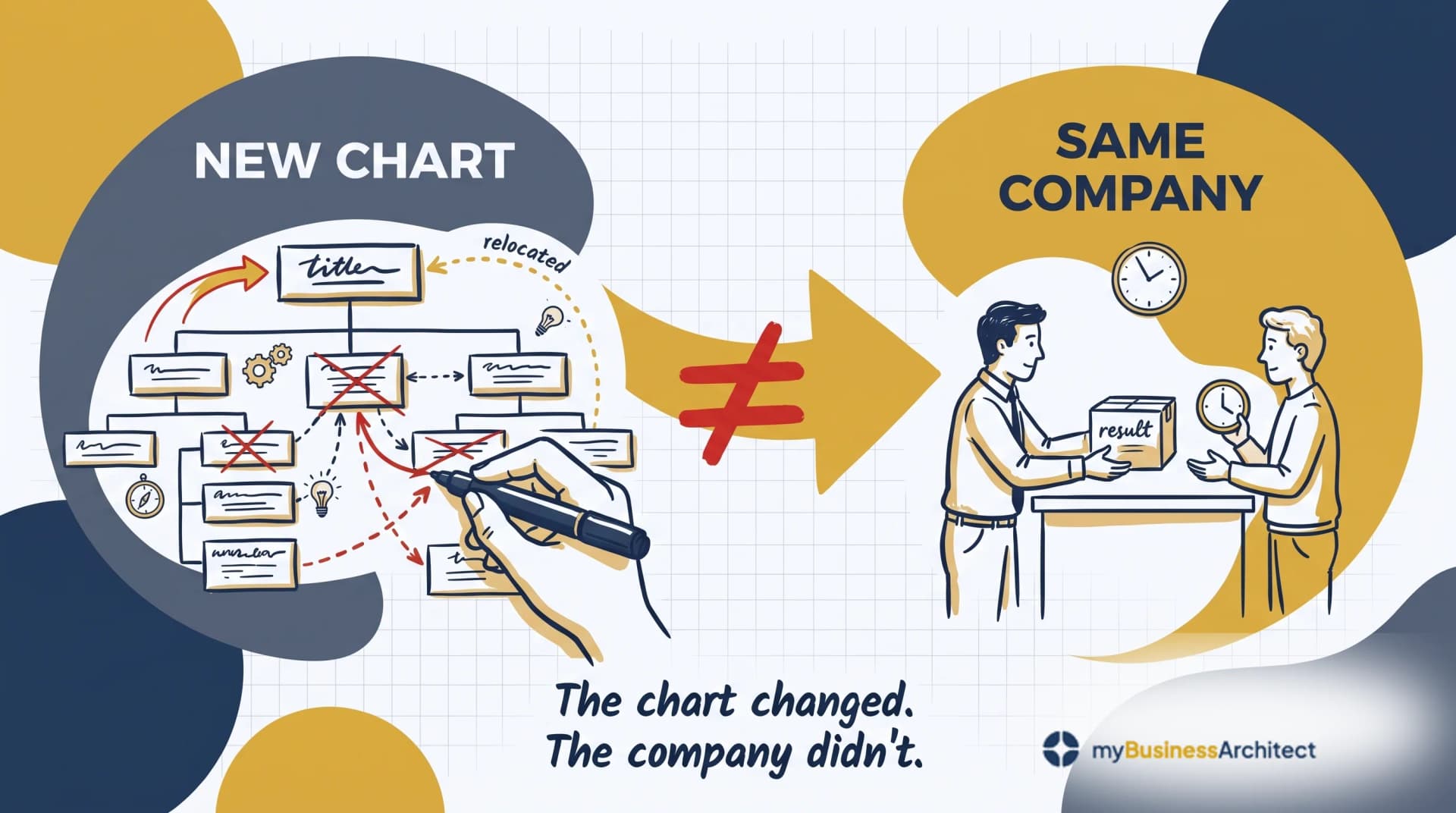
The reorg is the reflex leaders reach for when a strategy stalls. Why redrawing the org chart changes nothing, and what to do instead.
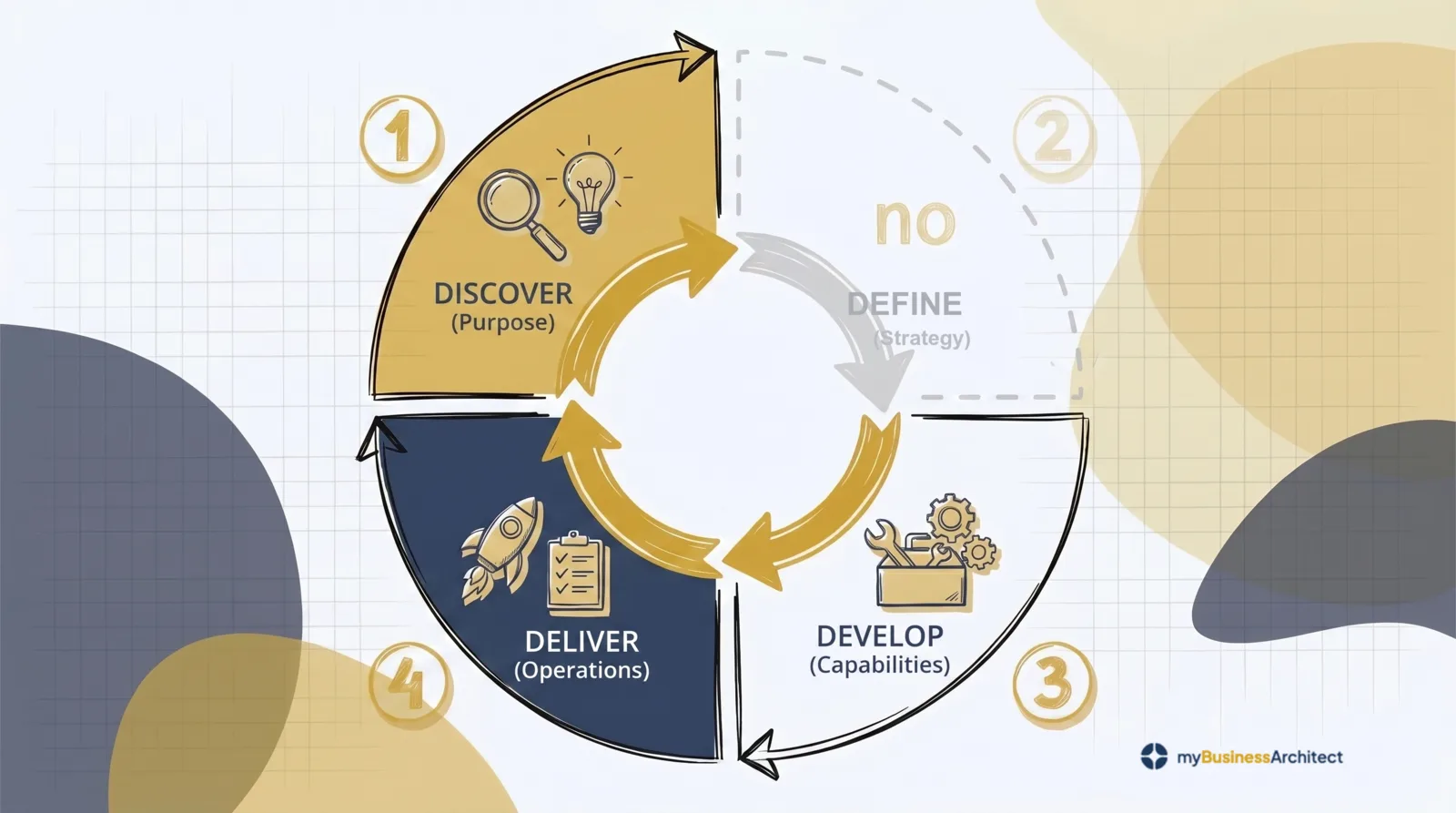
OKRs, benefits tracking, and capability maturity fail the same way, in the same place: none of them does the one phase where you actually choose.

Sustaining a shared vocabulary is an organizational exercise. You need engagement, governance, political navigation, and persistent attention. That skill set is different, and most organizations underinvest in it.

Before deciding what to do, it helps to be honest about where you stand. Organizations exist at different levels of maturity when it comes to shared vocabulary, and the right next step depends on the starting point.

Most strategic decisions are slow for a reason that has nothing to do with the decision itself. They're slow because the organization has to build shared understanding before it can evaluate options.

This is the most common failure mode in organizational life, and it's the hardest one to name. You don't have a capability problem. You have an integration problem. And nobody sees it, because every part of the system looks fine when you examine it in isolation.

This is the invisible gap that eats organizational performance. Not a strategy gap. Not a resource gap. A capability gap that nobody can articulate because nobody has the language.

The next time your team sits down to define capabilities, or structure a business model, or design an operating framework, ask one question first: has someone already drawn this map?

There's a meeting that happens in every organization. It's the one where smart, committed people sit in the same room, discuss the same problem, and leave with completely different understandings of what was decided.

Your organization wrote a strategic plan. Then the environment shifted. A regulation changed. A competitor moved. A funding model collapsed. A crisis hit. And the plan — the plan that assumed a world that no longer exists — kept running, because nobody built a mechanism for updating it.

A budget shows you numbers. A business model shows you structure — the architecture of how your organization creates, delivers, and captures value. When something breaks, the numbers tell you how much you lost. The business model tells you where the design failed.

Frameworks are abundant. Methodologies are everywhere. What's rare is honest guidance about where to begin — not in theory, but in your specific organization, with its specific problems, its specific politics, and its specific constraints.

Ask five leaders in your organization a single question: "Why does this organization exist?" You'll get five different answers. None of them wrong. None of them specific enough to guide a single decision.

Once you understand what a capability actually is, the next question is where to invest. And the answer isn't "everywhere equally."

Most strategic plans are wish lists. They contain everything the organization could pursue, organized by theme, decorated with timelines, and presented with enough confidence to satisfy a board. What they don't contain is choices.
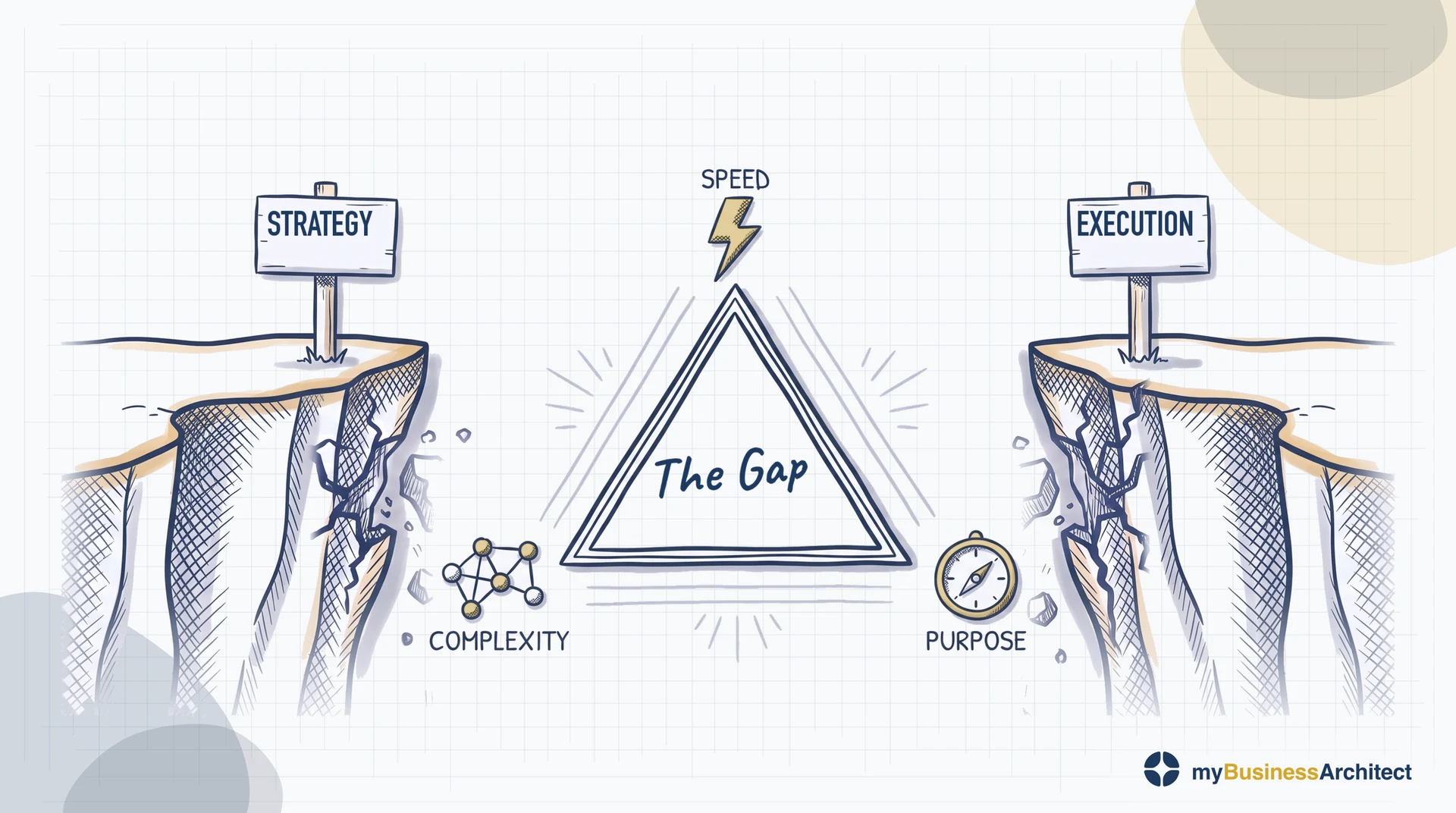
Your organization has smart people. Real commitment. Genuine urgency. And yet the strategic plan that looked brilliant in the boardroom is producing exactly nothing six months later. This isn't a mystery. It's a pattern. And the pattern has a structure.

Your organization invested in new capabilities. You upgraded systems. You redesigned processes. You trained teams. You built something genuinely better. And your stakeholders can't tell the difference.

Your organization has a strategic plan. It probably took months to produce. It involved offsites, consultants, executive workshops, and a final document with enough weight to stop a door.