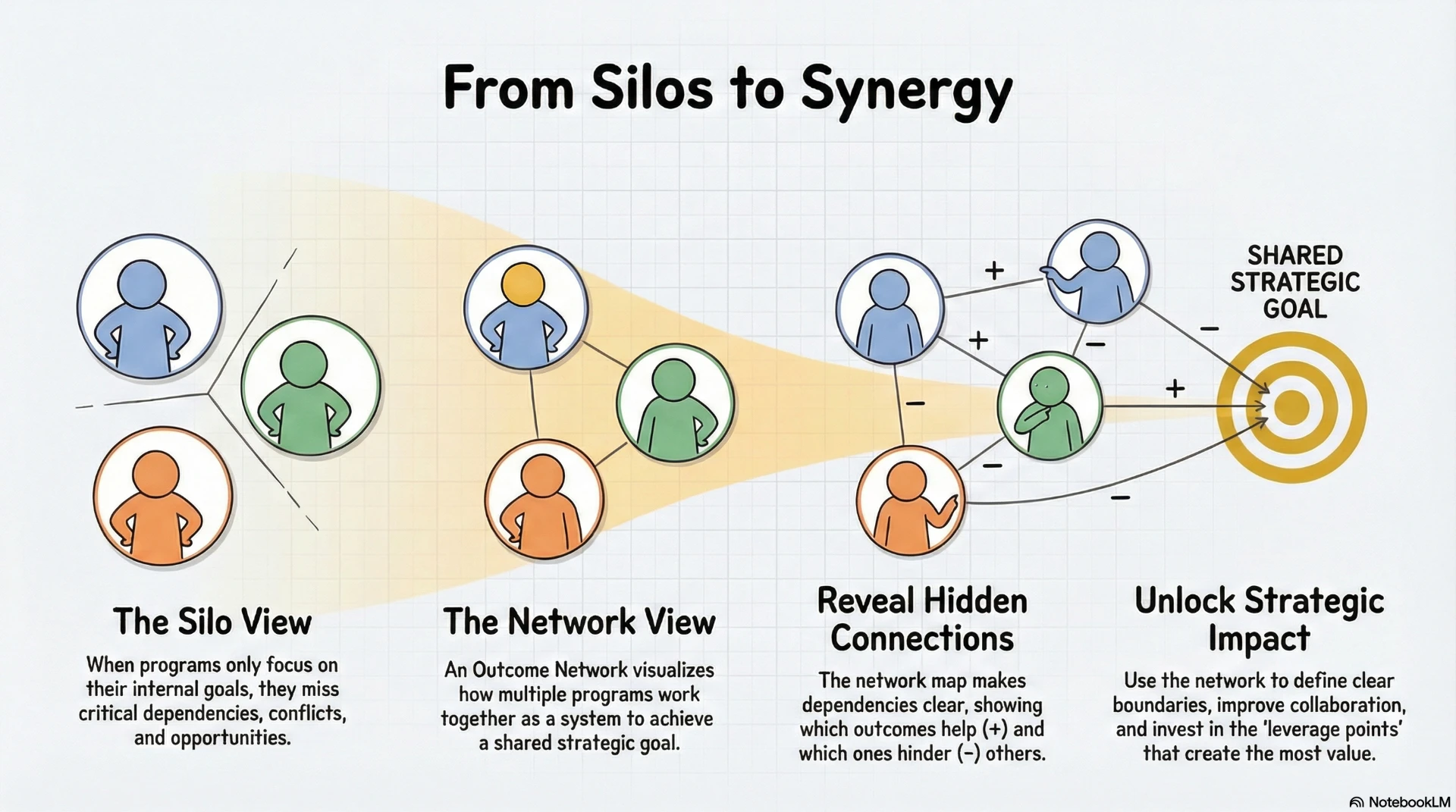
This chapter introduces Outcome Network Models to visualize cross-program dependencies. It explains how to define outcomes based on target group needs, map positive and inhibitory relationships, and use these networks to coordinate strategy and define scope boundaries.
By the end of this chapter, you'll be able to:
Before moving to the next chapter, ensure you can:
Apply these concepts to your own context:
1. **Map the programs in your organization that serve a common strategic outcome. What dependencies exist between their intermediate outcomes?** Are these dependencies formally managed, or do programs operate independently? What value could coordination create?
2. **Think about a program that consistently underperforms despite adequate resources and competent delivery. Could the root cause be dependency on outcomes from other programs that aren't materializing?** How would an outcome network help diagnose this?
3. **Identify an inhibitory relationship in your domain where achieving one outcome reduces another (classic trade-off). How is this trade-off currently managed?** Could an outcome network help stakeholders see the trade-off clearly and negotiate balanced approaches?
4. **Consider performance metrics your organization tracks. Are you measuring leading indicators (early in outcome chains) or only lagging indicators (strategic outcomes)?** How could outcome network analysis improve your measurement strategy?
5. **If you built an outcome network for your jurisdiction's highest strategic priority, how many programs would contribute? Do those programs coordinate?** What MOUs or governance structures could better align their efforts?