
Chapter 2: Mastering Complexity through Architecture
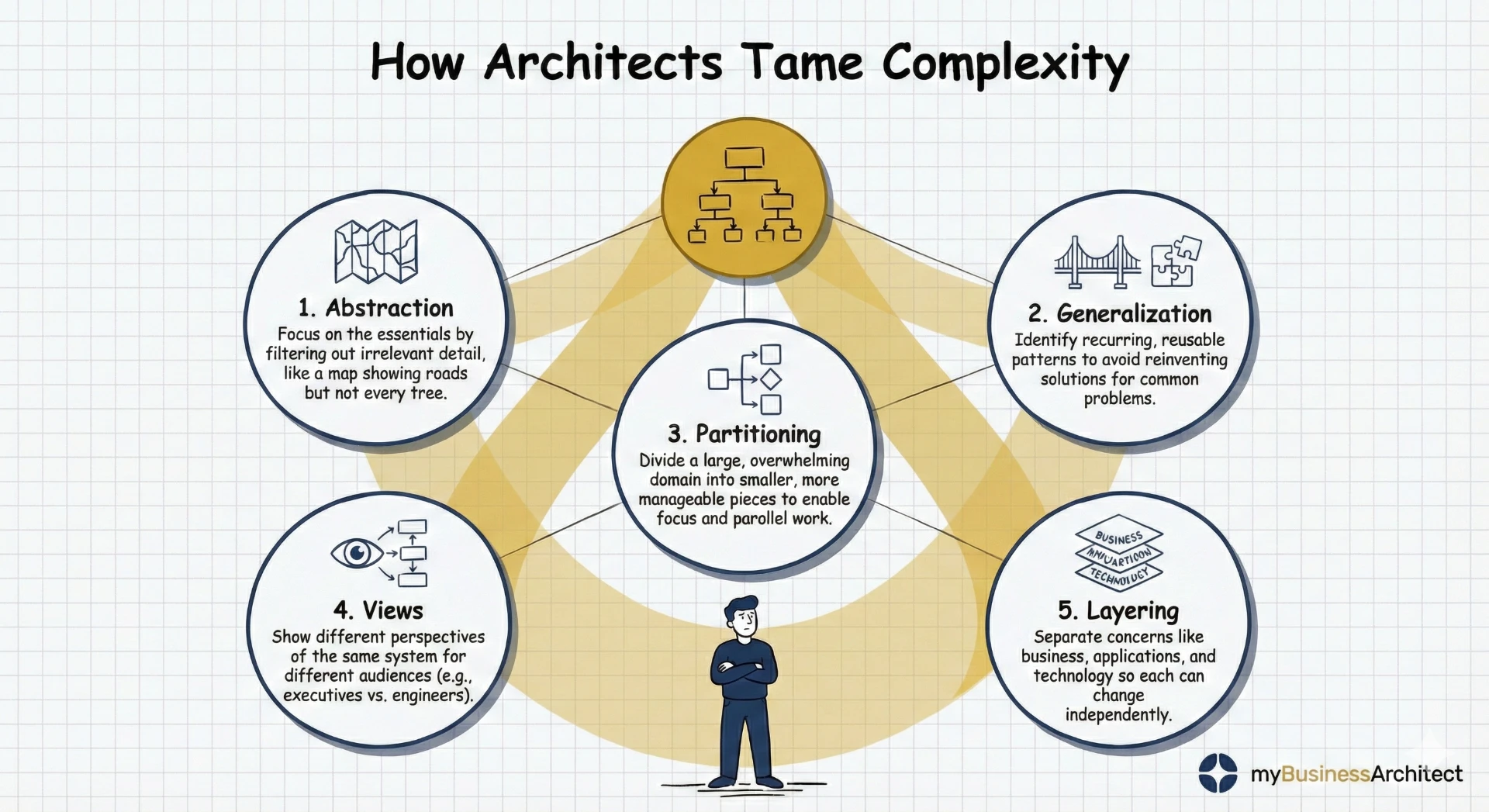
This chapter details the architect's toolkit for mastering complexity. It introduces five strategies—abstraction, generalization, partitioning, views, and layering—and explains how using models, frameworks, and design levels turns abstract needs into concrete implementations.
Learning Objectives
By the end of this chapter, you'll be able to:
- Apply five architectural strategies to manage essential and accidental complexity
- Distinguish between models, reference models, and frameworks
- Explain how abstraction, views, and layering work together to conquer complexity
- Describe the three views of any system: structural, functional, and behavioral
Key Concepts
AbstractionGeneralizationPartitioningViewsLayeringModelsReference ModelsFrameworksThree System ViewsDesign Levels
Self-Assessment
Before moving to the next chapter, ensure you can: