
Chapter 1: The Transformation Challenge
This chapter explains why transformation initiatives fail due to complexity rather than technology. It introduces enterprise architecture to manage this by distinguishing essential business complexity from accidental technical complexity, creating organizational alignment and integration.
Learning Objectives
By the end of this chapter, you'll be able to:
- Explain why business transformation initiatives frequently fail despite good intentions, funding, and talent
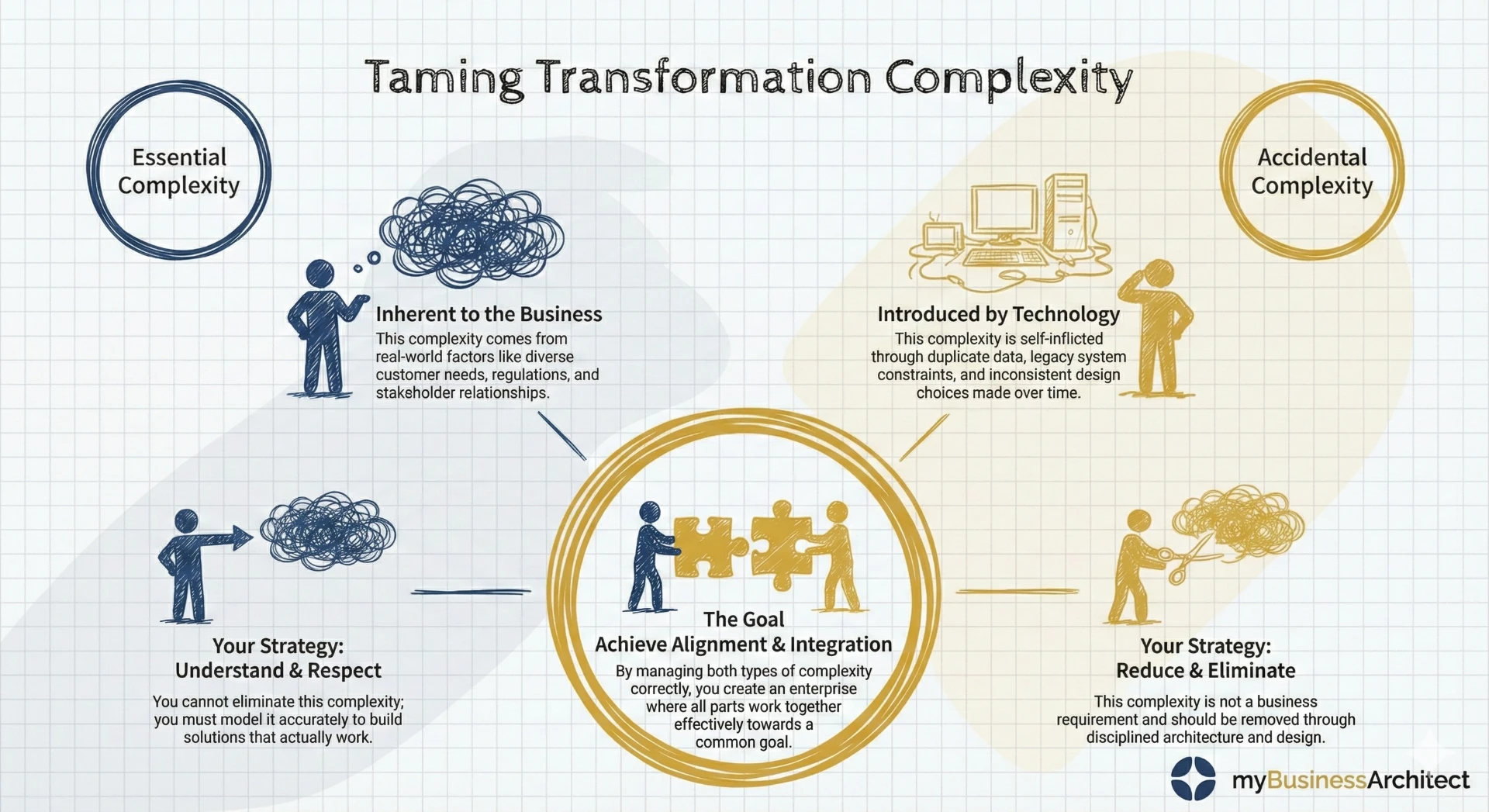
- Distinguish between essential complexity (inherent to the business) and accidental complexity (introduced by technology)
- Calculate a preliminary business case for investing in enterprise architecture
- Describe how alignment and integration create enterprise value
Key Concepts
Business TransformationTransformation ParadoxEssential ComplexityAccidental ComplexityAlignmentIntegrationArchitecture Business Case
Self-Assessment
Before moving to the next chapter, ensure you can: