OKRs vs KPIs: One Measures Change, the Other the Business
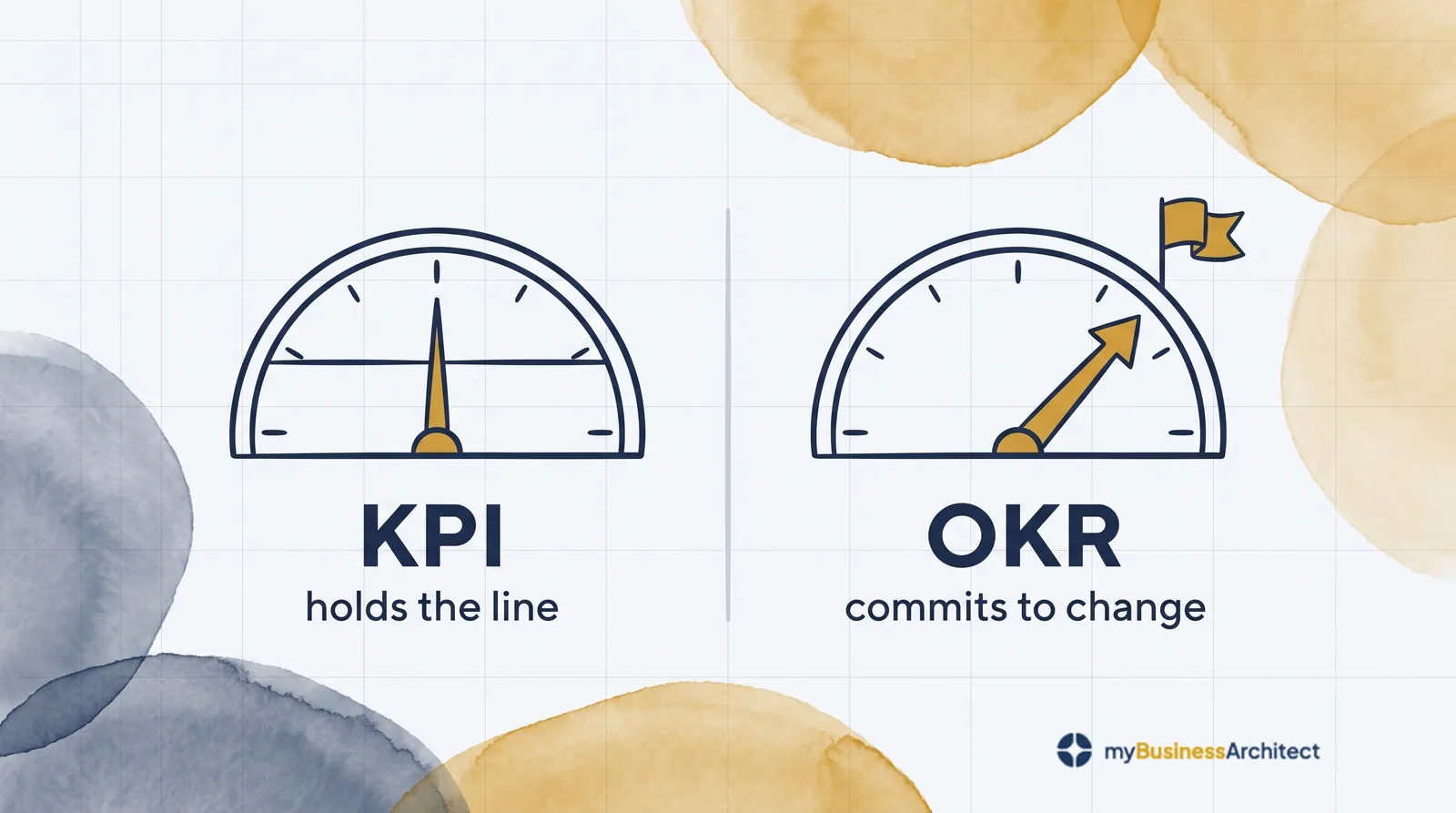
OKRs commit to changing something not true yet; KPIs hold a line you already hold. Not a format difference, a layer difference, and mixing them up is expensive.
Strategic thinking and planning for business architects: designing choices, managing trade-offs, and building the conditions for consistent execution.

OKRs commit to changing something not true yet; KPIs hold a line you already hold. Not a format difference, a layer difference, and mixing them up is expensive.

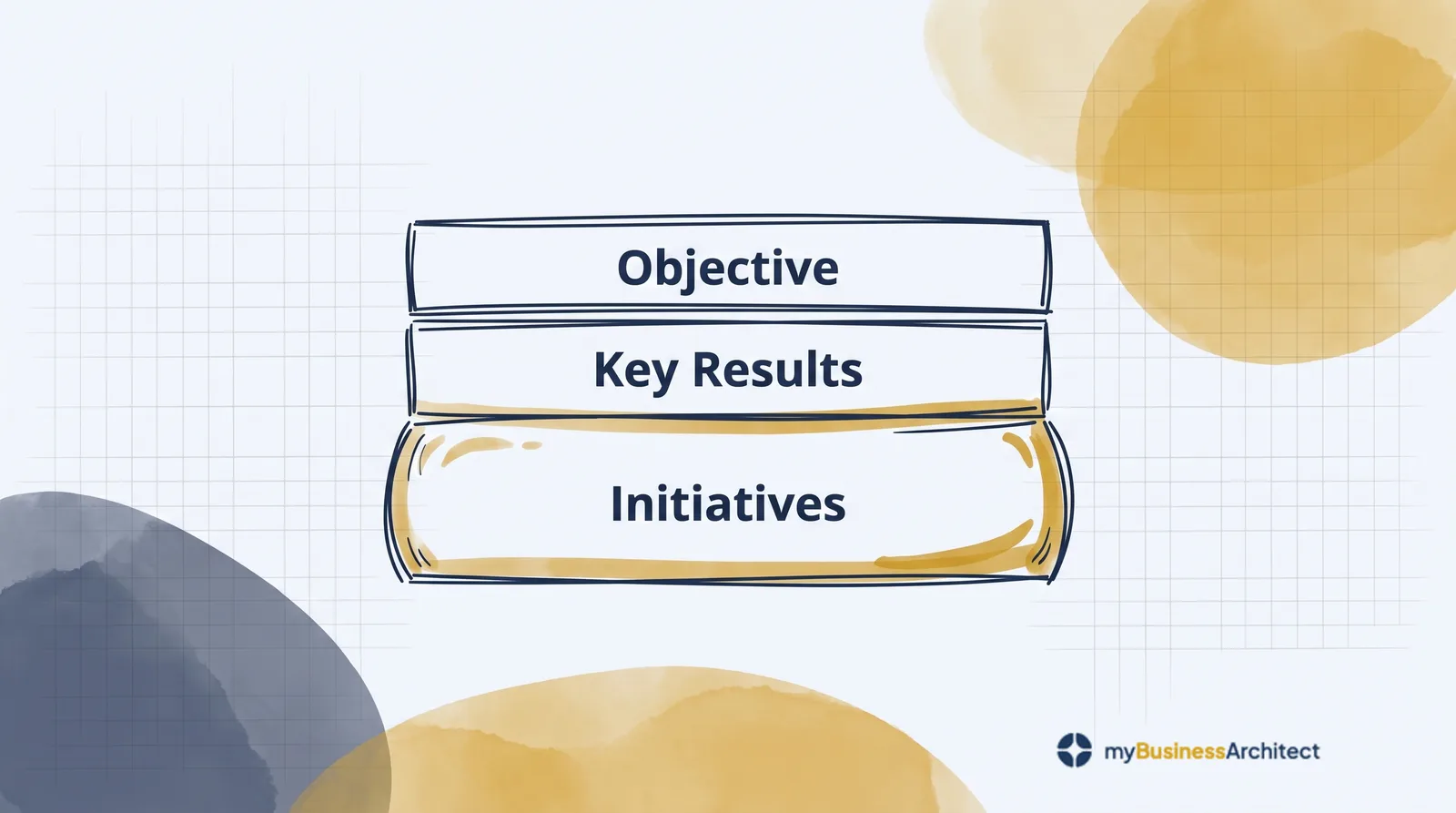
An OKR pairs an Objective with Key Results proving it happened, not busywork that feels like progress. Three examples show how to spot a task list in disguise.

A delivery-mandate OKR passes every check and changes nothing. How to spot an OKR that's really a task list, and how to put the strategy back.

Before deciding what to do, it helps to be honest about where you stand. Organizations exist at different levels of maturity when it comes to shared vocabulary, and the right next step depends on the starting point.

Most strategic decisions are slow for a reason that has nothing to do with the decision itself. They're slow because the organization has to build shared understanding before it can evaluate options.

Your organization wrote a strategic plan. Then the environment shifted. A regulation changed. A competitor moved. A funding model collapsed. A crisis hit. And the plan — the plan that assumed a world that no longer exists — kept running, because nobody built a mechanism for updating it.

Frameworks are abundant. Methodologies are everywhere. What's rare is honest guidance about where to begin — not in theory, but in your specific organization, with its specific problems, its specific politics, and its specific constraints.

Most strategic plans are wish lists. They contain everything the organization could pursue, organized by theme, decorated with timelines, and presented with enough confidence to satisfy a board. What they don't contain is choices.

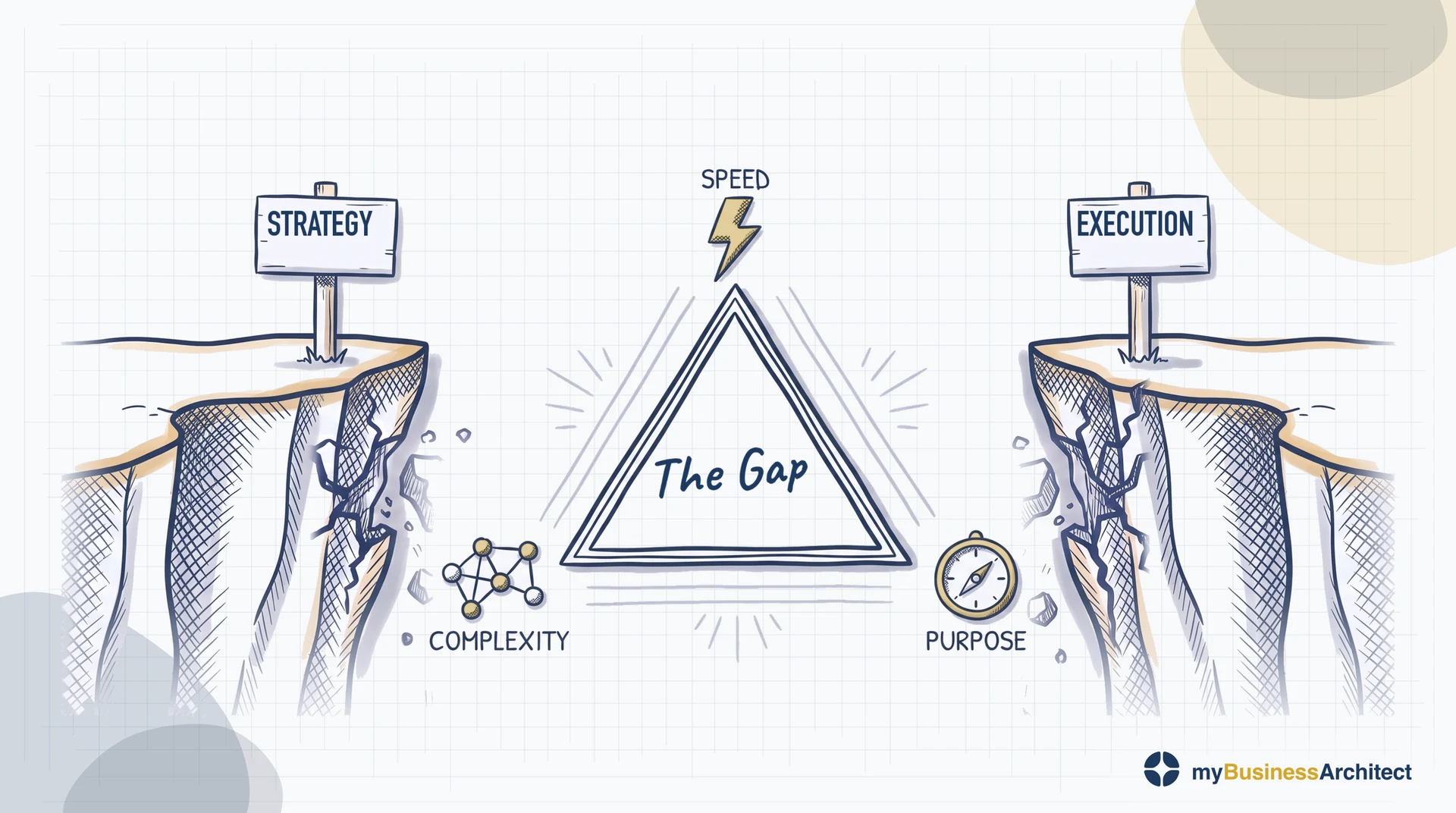
Your organization has smart people. Real commitment. Genuine urgency. And yet the strategic plan that looked brilliant in the boardroom is producing exactly nothing six months later. This isn't a mystery. It's a pattern. And the pattern has a structure.